Chicken Seamless Pattern Papers: A Clucking Good Design Asset
More Than Just a Cute Graphic
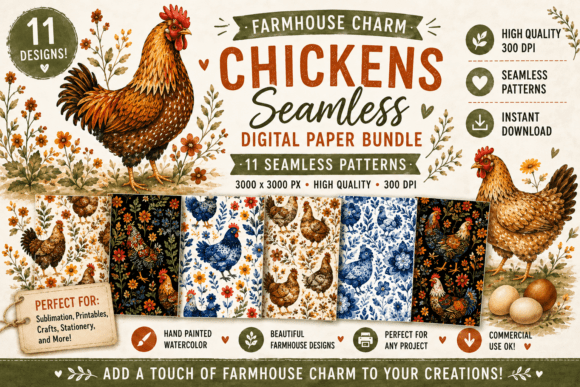
When you first hear the name, you might picture a simple repeating image of poultry. But the Chicken Seamless Pattern Papers collection is a sophisticated design toolkit that moves far beyond basic novelty. This bundle of 11 digitized, high-resolution seamless patterns offers a curated aesthetic that blends rustic charm with modern graphic sensibility. The patterns likely feature a mix of detailed chicken illustrations, stylized feathers, subtle farmyard motifs, and complementary geometric or organic backgrounds. The overall personality is one of warmth, authenticity, and playful elegance. It’s a style that feels handcrafted yet polished, making it a versatile asset for a range of projects that need to convey character and approachability. Think of it as a creative font for your backgrounds—it sets the tone and builds a visual foundation for your entire design.
Finding the Perfect Coop: Ideal Applications
The true strength of a resource like Chicken Seamless Pattern Papers lies in its adaptability across different mediums. For the entrepreneur building a brand identity for a farm-to-table restaurant, a local egg producer, or a boutique pet care service, these patterns can become the cornerstone of your visual language. Imagine them as the textured background for your logo design, the fill for your business cards, or the header image on your website. They instantly communicate a story of care, nature, and quality without a single word.
For content creators and bloggers, especially those in the food, lifestyle, or crafting niches, these papers are a secret weapon. Use them to create consistent and eye-catching social media graphics. A pattern can serve as a beautiful background for recipe cards, quote graphics, or Instagram story templates, ensuring your feed has a cohesive and recognizable look. In web design, a subtle pattern can add depth to a sidebar, a footer, or a call-to-action section, preventing flat, monotonous layouts without distracting from the main content.
The applications extend deeply into print and personal projects. For editorial design, consider using a muted version of a pattern as a chapter opener background in a cookbook or a magazine spread about sustainable living. For packaging design, these graphics can transform a simple box or bag into a memorable unboxing experience. Crafters and hobbyists will find endless uses: from scrapbooking digital layouts and creating custom planner stickers to designing unique gift tags, wrapping paper, and party invitations. The seamless nature means you can scale and tile them to fit any surface, from a tiny tag to a large poster, without worrying about awkward seams or repetition lines.
Working with Pattern Papers: A Practical Guide
Integrating a pattern bundle into your workflow is straightforward, but a few professional insights can elevate your results. First, consider visual hierarchy and readability. A busy, high-contrast pattern is fantastic for backgrounds and accents but can overwhelm body text. The key is balance. Use a bold, full-bleed pattern for impact areas like a book cover or a poster header. For areas with text, try reducing the pattern's opacity, using it as a small repeating strip, or selecting a simpler, more geometric pattern from the set that recedes visually. This ensures your typography—whether a clean sans serif font for modern clarity or a classic serif font for traditional elegance—remains king.
Next, think about font pairing and brand consistency. The rustic yet modern feel of chicken-themed patterns pairs beautifully with certain typefaces. For a complementary, grounded look, pair them with a sturdy slab serif font or a friendly handwritten font. For a cleaner, more contemporary contrast, a simple geometric sans serif can let the pattern shine while maintaining a professional edge. Using these patterns consistently across all your touchpoints—website, social media, print materials—reinforces your brand identity, making it instantly recognizable and building trust with your audience.
Finally, always evaluate the technical and licensing details. Since these are premium design assets, check the file formats (likely high-resolution JPEGs or PNGs) to ensure they meet your project's requirements, whether for crisp print or optimized digital use. Scrutinize the commercial license to understand your rights for using the patterns in client work, merchandise for sale, or digital products. A clear license is the hallmark of a professional design asset and protects your business. Before a final commit, test the patterns in your actual design software. Zoom in and out, tile them, and overlay your text and graphics to see how they perform in context. This hands-on test is the best way to confirm the patterns deliver the visual appeal and professionalism your project demands.