Crafting a Timeless Aesthetic with Vintage Rose & Teapot Junk Journal Pages
In the world of paper crafting and digital design, there is a distinct shift toward textures that feel lived-in and authentic. We are moving away from sterile, computer-perfect vectors and embracing the warmth of tangible history. This is exactly where the Vintage Rose & Teapot Junk Journal Pages collection finds its strength. As a set of design assets, these files are not just images; they are foundations for storytelling. Whether you are a graphic designer building a brand identity for a boutique tea shop, or a hobbyist assembling a memory book, this collection offers a specific, nostalgic mood that is difficult to replicate with modern digital tools alone.
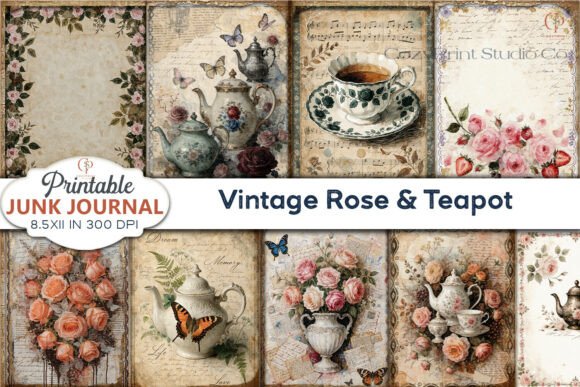
The collection consists of ten high-quality JPEG files, each rendered at 300 DPI and sized at 8.5 x 11 inches. This technical specification is crucial for creatives who demand professional results. The 300 DPI resolution ensures that when you send these designs to a commercial printer or use them in high-end editorial design, the ink sits crisply on the paper without pixelation. The 8.5 x 11 inch format is the standard for home office printing, making these files immediately accessible for instant projects. You do not need to resize or convert them; they are ready to function the moment you download them.
The Visual Language of Nostalgia
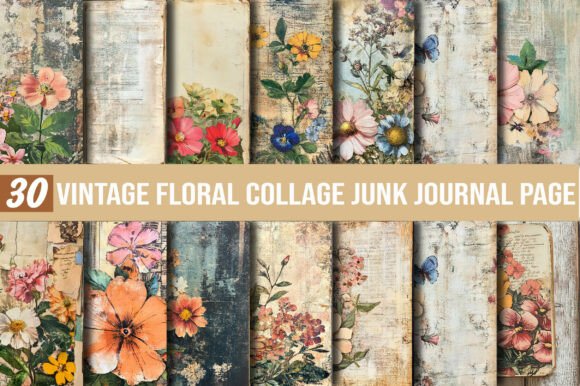
Understanding the visual personality of the Vintage Rose & Teapot Junk Journal Pages is key to using them effectively. The aesthetic leans heavily into the "Cottagecore" and "Shabby Chic" movements, characterized by soft palettes, floral motifs, and the delicate linework associated with antique stationery. Unlike modern sans serif font designs that prioritize minimalism, these pages offer complexity and layering. They mimic the look of aged paper, faded ink, and pressed flowers.
For a content creator or marketer, this visual language communicates warmth, care, and tradition. If you are working on packaging design for artisanal goods—perhaps homemade jams, candles, or loose-leaf teas—these backgrounds provide an instant signal of quality and handmade craftsmanship. The imagery of teapots and roses is universally recognized, transcending language barriers to evoke feelings of comfort and hospitality. This makes the collection a powerful tool for businesses looking to humanize their digital presence.
Practical Applications for Modern Creators
While the files are named for junk journaling, their utility extends far beyond traditional scrapbooking. In the realm of web design and social media graphics, texture is a valuable currency. A flat white background can often feel cold or corporate. By incorporating elements from these vintage pages as subtle background textures or featured focal points, you can add depth and visual interest to your layouts.
- Social Media Marketing: Use the pages as backgrounds for quote cards or promotional announcements. The vintage texture makes text pop, especially when paired with a clean serif font or a bold display font. This is particularly effective for Instagram feeds or Pinterest boards that aim for a cohesive, atmospheric aesthetic.
- Digital Products: If you sell digital planners or tablet journals, these JPEG files can be imported into apps like GoodNotes or Procreate to create custom covers and dividers. The high resolution ensures they look sharp on high-definition screens.
- Physical Collage Art: For the hands-on crafter, printing these pages on different media changes the outcome entirely. Print on matte cardstock for a sturdy journal cover, or on vellum for a translucent, ethereal overlay effect in your collage art.
Integrating Vintage Assets into Professional Design
One of the challenges designers face when using vintage assets is maintaining a professional edge. It is easy for a design to look cluttered or kitschy if not handled with a strategic eye. When working with the Vintage Rose & Teapot Junk Journal Pages, the key is balance. Because the pages are rich in detail, they pair best with cleaner elements.
Consider the principle of visual hierarchy. If you are creating a flyer or a menu, let the vintage page serve as the canvas. Then, layer your information using a modern typeface. A geometric sans serif font creates a beautiful contrast against the organic, hand-drawn feel of the roses and teapots. This juxtaposition—old world meets new world—creates a sophisticated, curated look that elevates the project from a simple craft to professional graphic design.
Font Pairing and Brand Consistency
Choosing the right typography to accompany these pages is essential for brand identity. If you are using these pages to build a brand, you need a font pairing that reinforces the message. For a luxury tea brand, you might pair the vintage imagery with a refined script font for headers and a legible serif font for body text. This combination suggests elegance and tradition.
Conversely, if you are a modern blogger who simply loves the vintage aesthetic, you might use a handwritten font to maintain a personal, diary-like feel. The goal is consistency. Every time you use the Vintage Rose & Teapot Junk Journal Pages in your content, your audience should recognize the style immediately. This repetition builds brand recognition and trust.
Readability and Technical Considerations
As an experienced designer, I always emphasize readability. A beautiful background is useless if it obscures the message. When using these textured JPEG files, ensure your text has enough contrast to stand out. You may need to add a semi-transparent layer or a "knockout" shape behind your text to ensure legibility.
Furthermore, because these are premium font style assets (in terms of quality and resolution), treat them with care. While the files are high quality, always preview your work before sending it to print. Check for any color shifts between your screen and the printer. The 300 DPI resolution provides a safety net for sharpness, but color management remains the designer's responsibility.
Licensing and Commercial Use
For entrepreneurs and small business owners, the commercial utility of design assets is a primary concern. These digital files are versatile design assets intended for a wide range of projects. Whether you are designing a logo for a client, creating merchandise, or producing content for your own business, the files are structured to support commercial workflows.
However, always respect the boundaries of the license. Since these are digital downloads, they are intended for you to use in your projects, not to resell the raw files themselves. This is a standard best practice in the creative industry. You are purchasing the right to use the art, not the art to resell as a competitor. This ensures that the value of the asset remains high for all creators.
Conclusion
The Vintage Rose & Teapot Junk Journal Pages offer more than just pretty pictures; they provide a bridge between the tactile warmth of the past and the efficiency of modern digital creation. Whether you are a hobbyist looking to beautify a personal journal or a professional designer seeking to add texture to a logo design or marketing campaign, this collection delivers. By combining these high-resolution assets with thoughtful typography and strategic design principles, you can create work that is visually stunning, emotionally resonant, and professionally sound.